
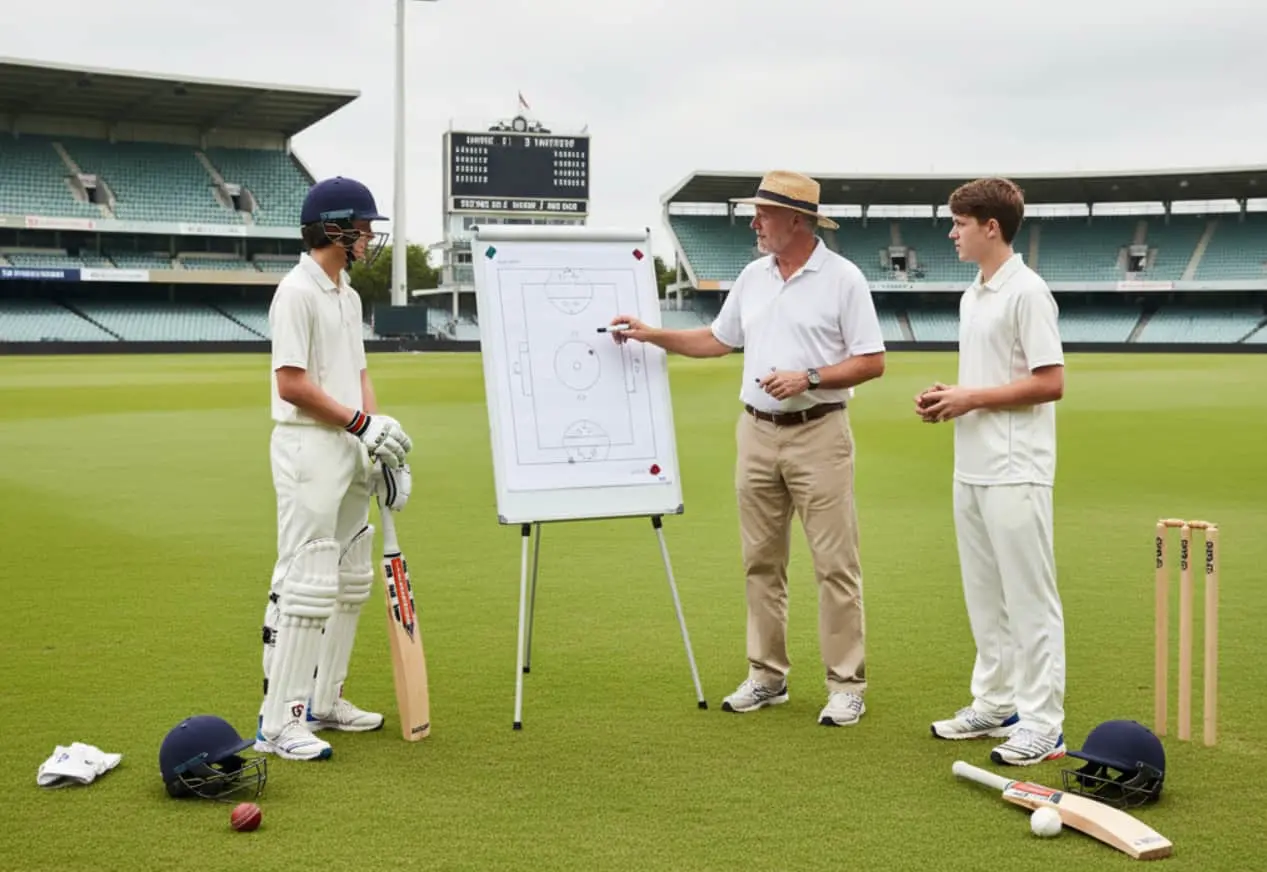
The Defining Characteristics of Modern Cricket
We observe that modern cricket is a refined blend of athleticism, intelligence, adaptability, and precision. The contemporary game demands far more than traditional technique. Players are now required to execute skills under intense pressure, adapt instantly to conditions, and contribute across multiple disciplines. Whether in Test cricket, One Day Internationals, or T20 formats, success is shaped by preparation, awareness, and flawless execution.
Modern cricket is defined by speed of decision-making, tactical depth, and physical excellence. Teams that dominate consistently are those that align skill development with strategic clarity.
Understanding the Three Competitive Formats
Test Cricket: Endurance, Technique, and Tactical Mastery
We regard Test cricket as the ultimate examination of a cricketer’s complete skill set. Batters must display compact technique, soft hands, and the ability to leave deliveries with discipline. Bowlers rely on relentless accuracy, seam presentation, and intelligent use of conditions.
Winning Test matches depends on:
-
Opening stability and middle-order resilience
-
Bowling partnerships maintaining sustained pressure
-
Fielding intensity over extended sessions
-
Strategic declarations and session-based planning
Captains in Test cricket manage time, pitch deterioration, and player workloads with calculated foresight.
One Day Internationals: Structured Aggression and Control
We identify ODI cricket as the format where balance determines outcomes. Teams must blend controlled accumulation with timely acceleration. Batters pace their innings carefully, while bowlers aim to contain and strike at key moments.
Key ODI success factors include:
-
Powerplay optimization
-
Middle-over rotation without losing momentum
-
Death-over precision with bat and ball
-
All-rounders offering tactical flexibility
Field placements and bowling changes are driven by match situations rather than fixed plans.
T20 Cricket: High-Impact Skills and Instant Execution
We acknowledge that T20 cricket is defined by intensity and innovation. Every delivery carries consequence. Batters focus on strike rate, boundary options, and unconventional shots. Bowlers rely on variation, accuracy, and deception.
Dominant T20 teams emphasize:
-
Specialized player roles
-
Match-up-based bowling selections
-
Explosive yet calculated batting approaches
-
Elite athletic fielding units
Advanced Batting Techniques in Modern Cricket
Technical Foundations for All Formats
We emphasize that elite batting begins with balance, alignment, and controlled footwork. Modern batters train to access scoring zones all around the wicket while maintaining defensive solidity.
Core batting competencies include:
-
Late contact and bat-face control
-
Efficient backlift mechanics
-
Strong base against pace and spin
-
Shot selection aligned with field settings
Innovative and Adaptive Shot-Making
We recognize innovation as a defining trait of modern batters. Shots such as the reverse sweep, scoop, ramp, and switch hit are now essential tools. These shots are executed with calculated intent, forcing bowlers to alter lengths and disrupting defensive fields.
Bowling Excellence: Discipline, Variation, and Intelligence
Fast Bowling in the Contemporary Game
We observe that modern fast bowlers combine pace, movement, stamina, and tactical awareness. Success is achieved through consistency rather than sheer speed.
Elite fast bowlers excel at:
-
Maintaining disciplined lengths
-
Using seam and swing subtly
-
Executing slower balls and cutters
-
Delivering yorkers under pressure
Workload management and fitness conditioning are integral to sustaining performance.
Spin Bowling as a Strategic Force
We consider spin bowling a decisive element across formats. Modern spinners rely on variation, accuracy, and reading the batter’s intent rather than excessive turn.
Effective spin strategies include:
-
Changing pace through the air
-
Altering release points
-
Using the crease intelligently
-
Building pressure through dot balls
Fielding: The Competitive Advantage
Athletic Standards and Tactical Awareness
We affirm that fielding excellence often determines match outcomes. Modern cricket demands speed, agility, anticipation, and flawless execution.
High-performing fielding units demonstrate:
-
Rapid ground coverage
-
Safe catching in high-pressure moments
-
Direct-hit throwing accuracy
-
Smart positioning aligned with bowling plans
Fielding is treated as a core skill, not a supplementary one.
Leadership, Strategy, and Team Balance
The Modern Captain’s Role
We recognize that modern captains are tacticians who blend instinct with data-driven insights. Leadership now involves proactive decision-making, clear communication, and trust in defined player roles.
Successful captains excel at:
-
Reading momentum shifts
-
Managing bowling rotations
-
Adjusting fields dynamically
-
Maintaining team composure
Constructing a Balanced Playing XI
We emphasize that team balance is essential. Successful sides combine batting depth, bowling variety, and athletic fielding. All-rounders are pivotal, offering flexibility in both strategy and execution.
Fitness, Preparation, and Mental Conditioning
Physical Conditioning as a Performance Pillar
We observe that modern cricketers adhere to advanced fitness programs focusing on strength, endurance, mobility, and recovery. Injury prevention and longevity are prioritized through structured training cycles.
Mental Toughness and Competitive Focus
We stress that mental resilience separates elite performers from the rest. Players train to handle pressure through routine development, visualization, and situational awareness.
Data, Technology, and Performance Analytics
We acknowledge that analytics and technology have transformed modern cricket. Teams analyze opposition tendencies, pitch behavior, and individual match-ups to refine strategies.
Key analytical tools include:
-
Video performance breakdowns
-
Ball-tracking systems
-
Player workload monitoring
-
Predictive tactical modeling
These insights enhance preparation and in-game decision-making.
Conclusion: The Complete Skill Set for Modern Cricket Success
We conclude that modern cricket rewards those who combine technical excellence with strategic intelligence and mental resilience. Mastery of batting versatility, bowling discipline, athletic fielding, and leadership clarity defines sustained success. Teams that evolve continuously and execute with precision remain dominant across all formats of the game.